
Authentic Moroccan Chermoula Recipe (10-Minute Herb Marinade)
 By Chef Mouaad
•October 11, 2026•
Sauces & Dips•
Why You’ll Love This Chermoula Recipe
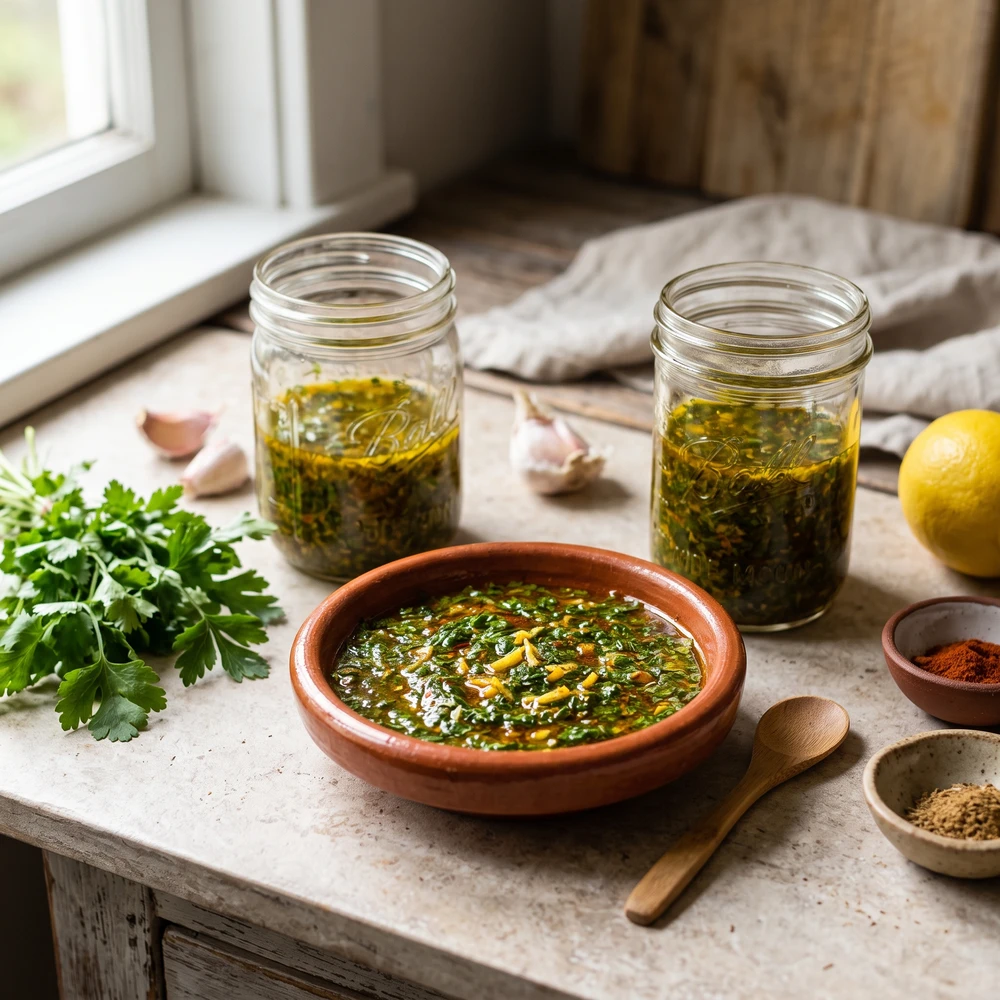
Bold, herbaceous, and intoxicatingly fragrant, this authentic 10-minute Chermoula Recipe represents the very soul of North African culinary tradition. Equal parts fresh cilantro and Italian flat-leaf parsley are pounded with toasted cumin, sweet paprika, fresh garlic, fruity cold-pressed extra virgin olive oil, and the secret weapon of Maghrebi kitchens: salt-cured Moroccan preserved lemon peel. Whether used as a vibrant marinade, a dipping sauce, or a finishing drizzle, it infuses instant Mediterranean sunshine into any dish.
- 10-Minute No-Cook Powerhouse: Whisk or pound together in ten minutes flat—no stovetop cooking required.
- The Ultimate All-Purpose Marinade: Tenderizes and seasons white fish, shrimp, chicken skewers, and roasted root vegetables with profound North African depth.
- Flawless Seafood Companion: Makes the ultimate aromatic glaze brushed across our crispy, restaurant-quality Pan-Seared Salmon, or spooned over golden skillet-crisped Crispy Socarrat Rice.
Chef Mouaad’s Test Kitchen Notes & Culinary Science
1. Preserved Lemon Fermentation vs. Raw Citric Acid: In authentic Moroccan cuisine, fresh lemon juice provides top-note brightness, but the foundational complexity comes from salt-preserved lemons (l’hamd marakad). During the lacto-fermentation aging process, bitter limonene in the rind breaks down into savory, floral umami compounds. Incorporating finely minced preserved peel introduces essential-oil-rich citrus salinity that clings to protein surfaces without chemically denaturing delicate fish fibers the way raw citric acid does.
2. Dry-Toasted Lipid Extraction (Cumin & Coriander): Raw ground cumin can taste dusty and flat. We briefly toast whole cumin and coriander seeds in a dry skillet for 90 seconds until fragrant before grinding. This heat triggers the Maillard reaction and mobilizes lipid-soluble volatile compounds (cuminaldehyde and linalool). When whisked into extra virgin olive oil, these fat-soluble aromatics dissolve into the oil emulsion, perfuming the entire sauce.
3. The 50/50 Herb Ratio Standard: Our test kitchen standard enforces a precise 1:1 weight ratio between flat-leaf Italian parsley and fresh cilantro. Pure cilantro can overpower subtle seafood flavors with sharp aldehydes; flat-leaf parsley tempers the bouquet with clean chlorophyll sweetness and provides optimal leaf surface area to carry the olive oil.
format_list_bulleted Recipe Ingredients
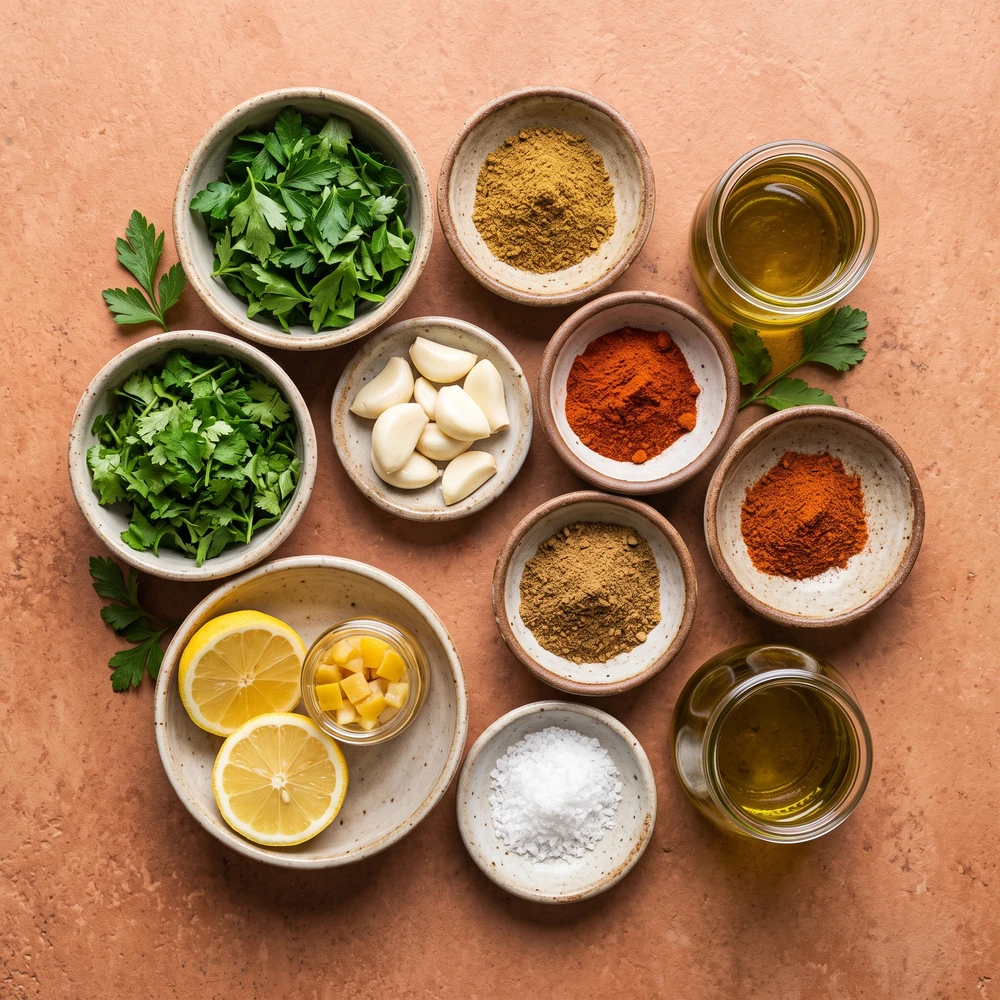
| 1 cup | Fresh Cilantro (Packed)Leaves and tender stems finely minced for citrusy herbal brightness |
| 1 cup | Fresh Flat-Leaf Parsley (Packed)Italian parsley providing clean chlorophyll sweetness to balance cilantro |
| 4 cloves | Fresh GarlicPounded with salt into a smooth, pungent paste |
| 1.5 tsp | Ground Toasted CuminFreshly toasted and ground for warm, woodsy, earthy aromatics |
| 1 tbsp | Ground Sweet PaprikaProvides rich terracotta color, gentle sweetness, and mild warmth |
| 1 tsp | Ground CorianderDry-toasted seed notes that harmonize herbs and spices |
| 1/4 tsp | Cayenne PepperSubtle back-of-the-throat piquant kick (adjust to taste) |
| 1 tbsp | Moroccan Preserved Lemon PeelRinsed, pulp removed, and yellow rind finely diced for umami citrus |
| 3 tbsp | Fresh Lemon JuiceFreshly squeezed citric acid for punchy, vibrant brightness |
| 1/2 cup | Extra Virgin Olive OilCold-pressed fruity olive oil to bind spices and suspend herbs |
| 1 tsp | Fine Sea SaltPounded with garlic to break down cellular walls into paste |
kitchen Equipment Needed
Sharp Chef’s Knife & Board
Small Wire Whisk
Airtight Glass Mason Jar
Step-by-Step Cooking Instructions
Mince Fresh Herbs Finely
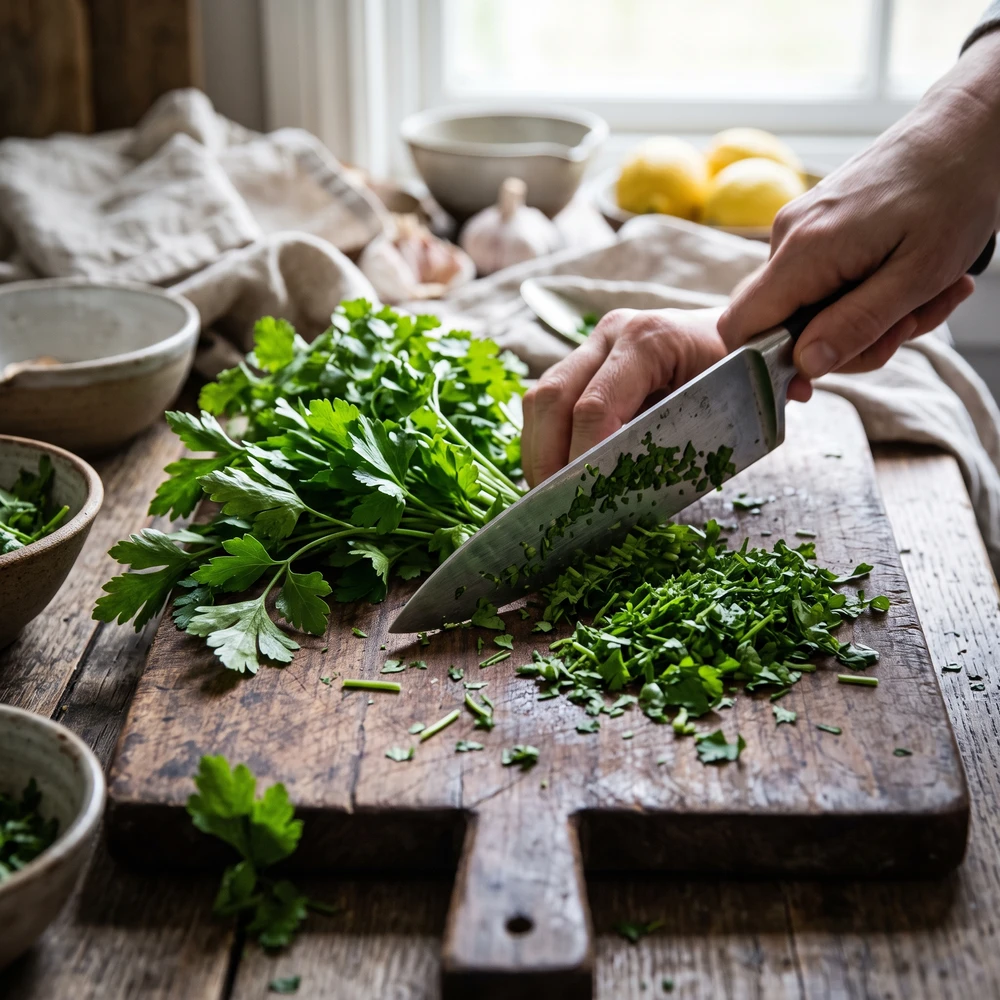
Thoroughly wash and spin-dry your fresh Italian flat-leaf parsley and cilantro. On a large cutting board, gather the herbs into a tight bundle and finely chop them with a sharp chef’s knife. Include the tender upper cilantro stems as they contain intense citrus aroma. Transfer the minced herbs to a mixing bowl.
Pound Garlic & Spices into a Paste
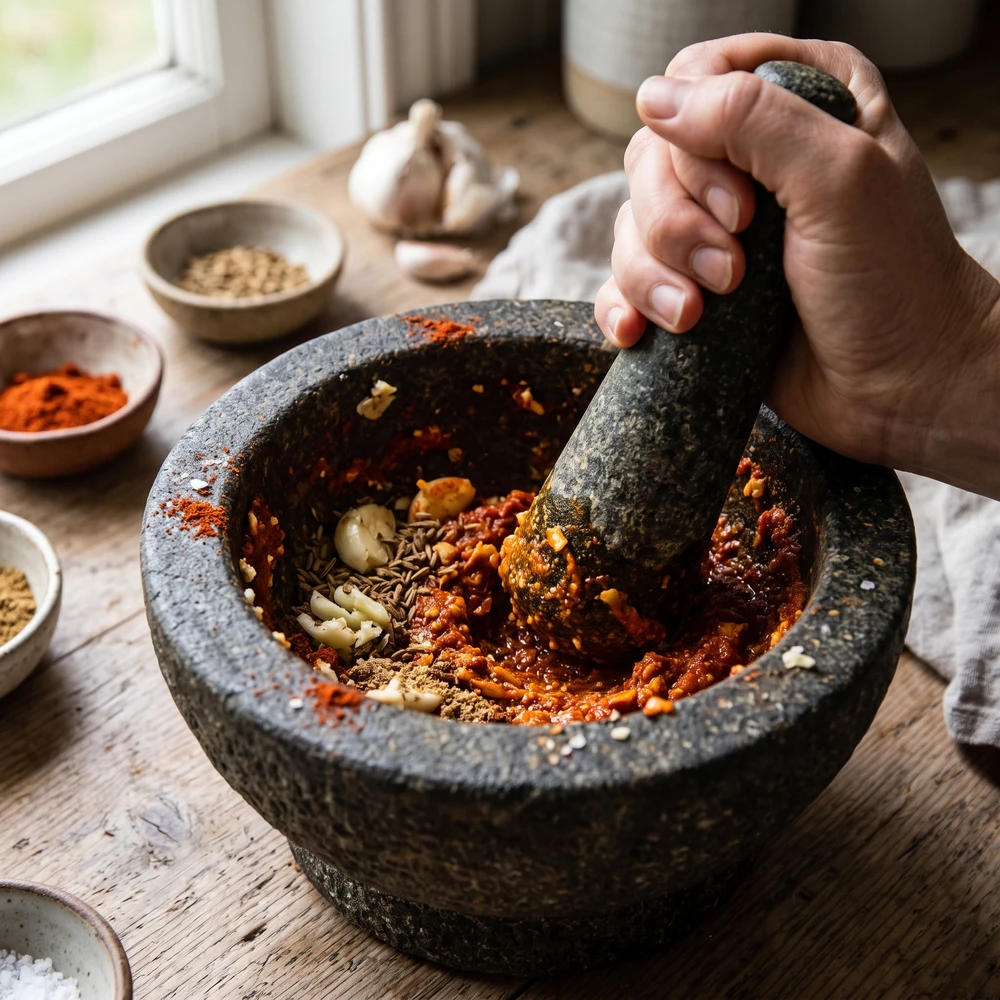
Place the peeled garlic cloves and 1 teaspoon of sea salt into your mortar. Using the pestle, pound firmly until a creamy garlic paste forms. Add the toasted ground cumin, sweet paprika, coriander, and cayenne pepper. Grind together for 60 seconds until a deep crimson, fragrant spice paste forms.
Whisk Olive Oil, Lemon & Preserved Peel
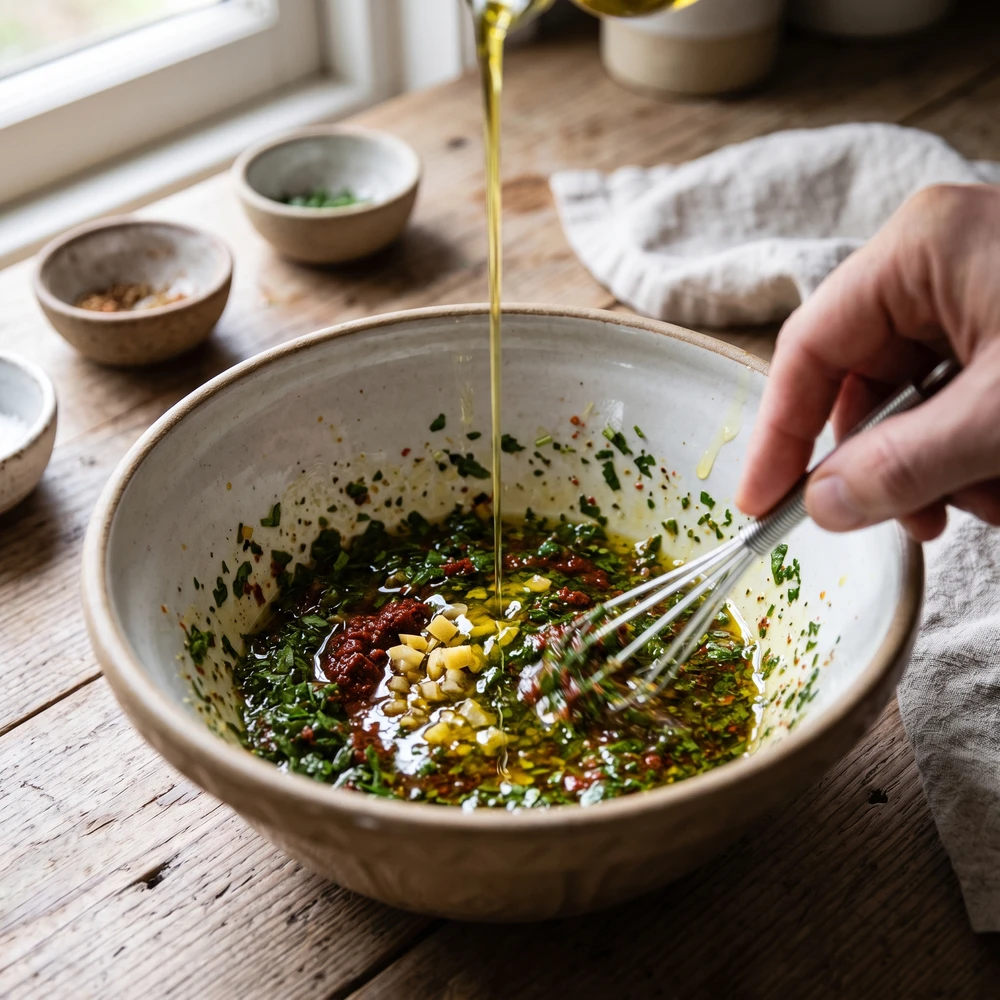
Scrape the pounded spice paste into the bowl with the minced herbs. Add the finely diced preserved lemon peel and fresh lemon juice. While whisking gently with a fork or small whisk, slowly pour in 1/2 cup of extra virgin olive oil until a glossy, textured green-and-red sauce emulsifies. Taste and adjust with a squeeze more lemon if desired.
Marinate Seafood, Meat, or Vegetables
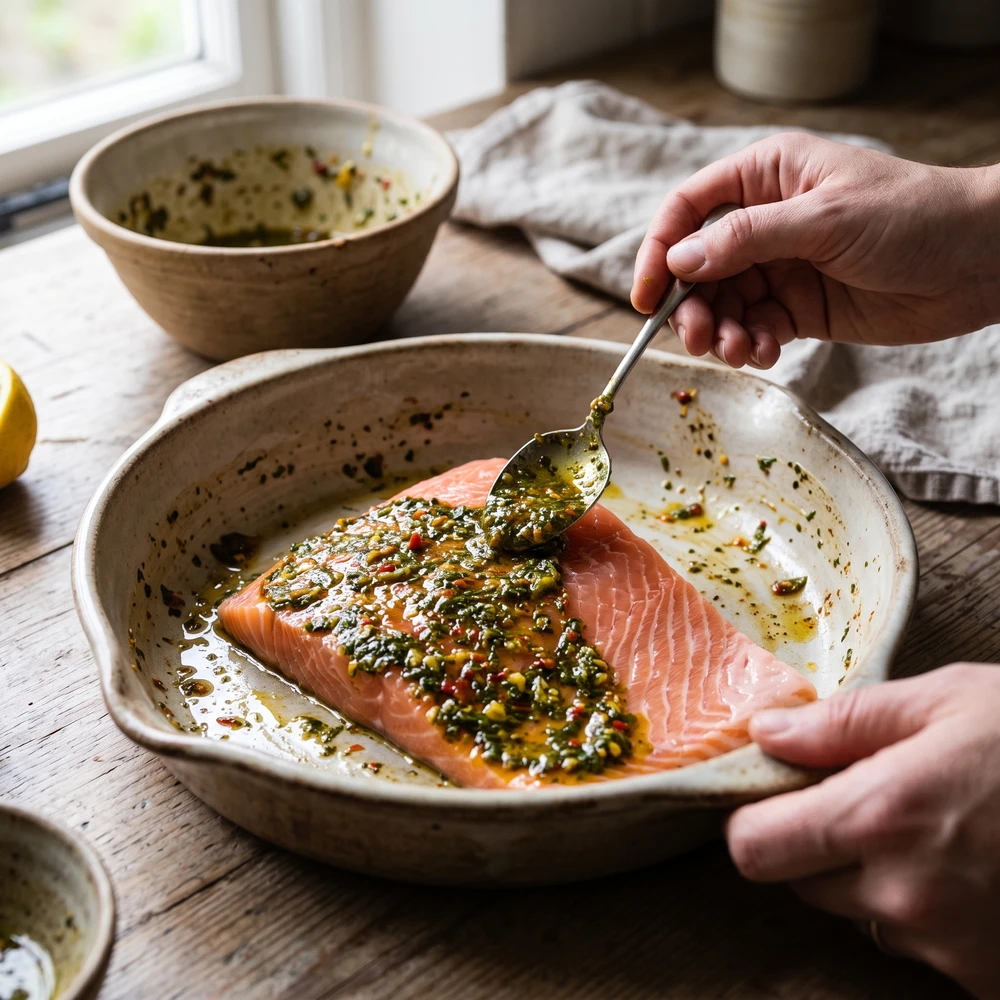
Your chermoula is immediately ready to use. Spoon it generously over fresh salmon fillets, whole sea bass, chicken skewers, roasted cauliflower steaks, or caramelized Air Fryer Plantains. For seafood, let marinate for 20 to 30 minutes before pan-searing, grilling, or baking. Reserve clean spoonfuls of sauce in a jar to drizzle as a finishing condiment at the table.
restaurant
🍽️ Serving Suggestions & Culinary Pairings
Chermoula is celebrated across North Africa as the undisputed soulmate to seafood. Brush a thick layer across our crispy-skinned Pan-Seared Salmon just before searing for a show-stopping Moroccan dinner. For an incredible side, spoon chermoula across a piping-hot skillet of Crispy Socarrat Rice to let the warm cumin and citrus juices soak into the golden rice crust.
For additional authentic North African marinades, tagine inspirations, and artisanal sauces, visit our partner kitchen at Savory Sweet Empire.
Pro Tips & Storage
Test Kitchen Pro Tips
- Rinse Preserved Lemons: Always rinse salt-cured preserved lemon wedges in cold water and scoop away the soft pulp. Use only the tender yellow peel, as the pulp contains excessive brine salt.
- Hand-Chopped vs. Blended: Hand-chopping with a chef’s knife or stone mortar preserves the distinct jewel-like herb flecks. If using a food processor, pulse strictly in 1-second bursts so it does not turn into an unappetizing watery green foam.
- Marinating Times: Fish and delicate seafood need only 20 to 30 minutes of marinating. Chicken breasts or lamb skewers can marinate for up to 12 hours in the refrigerator.
Storage & Freezing
Store homemade chermoula in a clean glass jar in the refrigerator for up to 7 days. Pour a thin film of olive oil over the surface to create an oxygen seal. Chermoula also freezes exceptionally well: freeze in silicone ice cube trays for up to 3 months, then pop out individual cubes to toss directly into hot pans or vegetable sautés.
For an unforgettable Maghrebi dinner, spoon this zesty herbaceous marinade over our sizzling cast iron Herb-Crusted Pan Seared Lamb chops.
To add a vibrant burst of North African herbs and lemon zest, spoon a tablespoon of this marinade over sizzling Authentic Skillet Shakshuka Recipe right before serving.
Frequently Asked Questions
What is chermoula sauce used for?
Chermoula is predominantly used across Morocco, Algeria, and Tunisia as a savory marinade and basting glaze for fish, shrimp, and seafood. It is equally delicious as a dipping sauce for flatbreads, tossed with roasted potatoes, or drizzled over grilled meats, or served as part of a traditional Maghrebi feast alongside a steaming glass of our Authentic Moroccan Mint Tea.
What is the difference between chimichurri and chermoula?
While both are oil-and-herb sauces, Argentine chimichurri relies on red wine vinegar, parsley, oregano, and garlic with minimal spice. Moroccan chermoula uses lemon juice, equal parts cilantro and parsley, and heavy warm spices like toasted cumin, sweet paprika, coriander, and preserved lemon.
Can you freeze homemade chermoula?
Yes. Chermoula freezes beautifully because the high olive oil content protects the herbs and ground spices from freezer burn. Spoon the sauce into ice cube trays, freeze solid, and store in a freezer bag for up to 3 months.
Should chermoula be blended in a food processor or made by hand?
Traditional chermoula is made by hand using a chef’s knife and mortar and pestle to preserve texture and prevent bitter oxidation. If using a food processor, pulse in short 1-second bursts so the herbs are finely chopped rather than pureed into a smoothie.