
Tangy Mango Amba Sauce (Authentic Middle Eastern Condiment)
 By Chef Mouaad
•October 11, 2026•
Sauces & Dips•
Why You’ll Love This Mango Amba Sauce
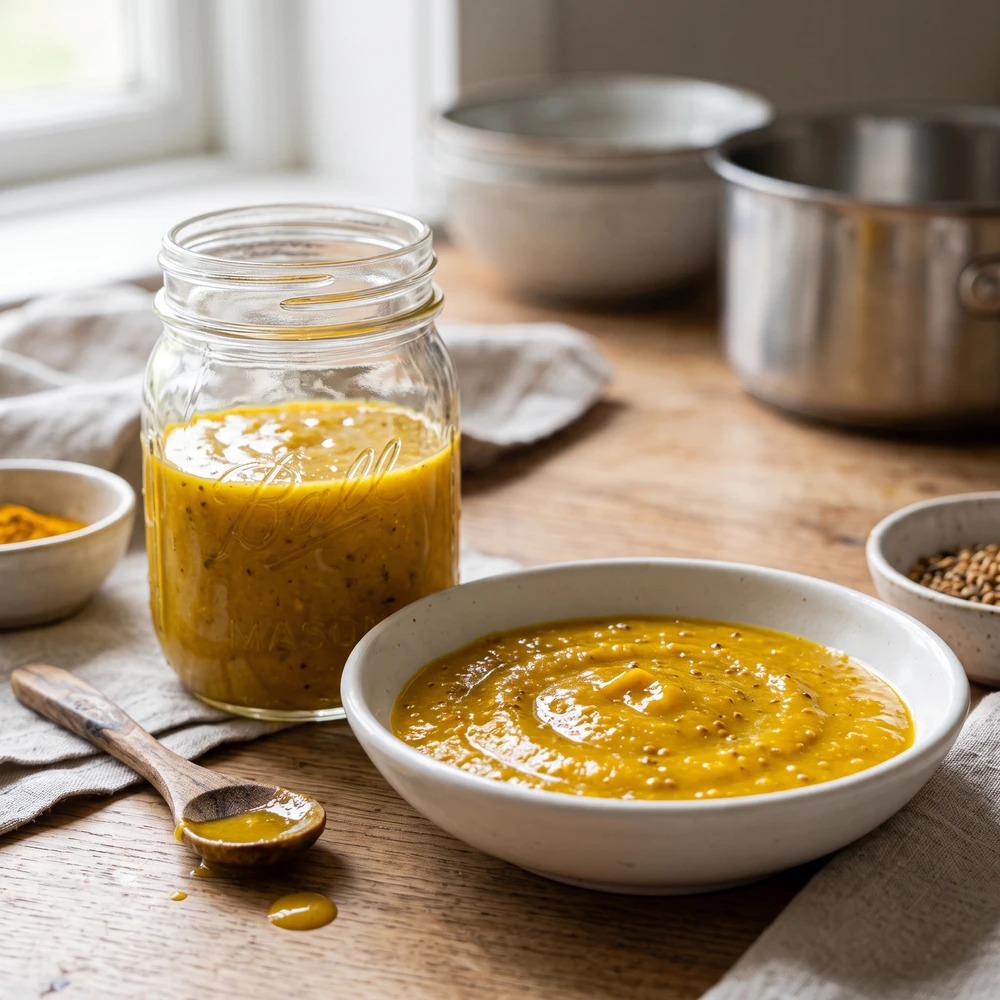
Electric, intensely aromatic, and unmistakably golden, homemade Mango Amba is the crowned jewel of Middle Eastern street food condiments. Born from historic maritime trade routes between Baghdadi Jewish merchants and Mumbai, amba weaves sweet-tart mangoes together with the unmistakable savory punch of ground fenugreek seeds, pungent yellow mustard seeds, warming cumin, and vivid turmeric. This quick stovetop technique delivers all the fermented funk and mouthwatering complexity of weeks-long sun-pickled mangoes in just 30 minutes.
- 30-Minute Stovetop Alchemy: Traditional street-stall amba requires weeks of lactic fermentation under the desert sun, but gently blooming the whole spices and simmering ripe mangoes in apple cider vinegar replicates that beloved punchy tang immediately.
- The Essential Street Food Drizzle: Unlocks authentic flavor profiles for sabich, shawarma, crispy Crispy Air Fryer Falafel bowls, and grilled kebabs.
- Brilliant Fusion Pairing: Its mouthwatering tartness makes an unforgettable condiment drizzled over sizzling Smashed Tacos to cut through rich beef tallow, or brushed across charred Paneer Tacos where the fenugreek and toasted cumin mirror warm Indian spice traditions—or served as an essential dipping condiment alongside hot, golden Pan Fried Halloumi on an elevated Mediterranean mezze platter. For enthusiastic cooks passionate about crafting artisanal condiments and global pantry staples, explore Savory Sweet Empire for more culinary deep dives.
Chef Mouaad’s Test Kitchen Notes & Culinary Science
1. Managing Fenugreek Sotolon Chemistry: Fenugreek (Trigonella foenum-graecum) is what gives amba its irreplaceable signature scent—a savory, maple-like aroma powered by the lactone compound sotolon. However, raw ground fenugreek contains extreme bitter glycosides. We bloom the ground seeds in warm olive oil over gentle low heat (below 300°F / 150°C) for just 60 seconds. This thermal step volatilizes the bitter trigonelline into nutty, complex aromatics without scorching the delicate powder.
2. Natural Fruit Pectin Suspension: Rather than relying on cornstarch or gums for body, this recipe uses natural fruit pectins inherent in ripe mangoes. Simmering the diced mangoes in an acidic solution of apple cider vinegar (pH ~3.2) unlocks the pectin matrix within the fruit cell walls. When blended with an immersion blender, these dispersed pectins naturally thicken the liquid into a glossy, spoonable glaze that clings effortlessly to proteins.
3. Balancing Acetic & Malic Acids: To replicate the fermented complexity of sun-cured amba, we use apple cider vinegar instead of plain distilled white vinegar. Apple cider vinegar provides both acetic acid and gentle malic acid, which harmonizes seamlessly with the natural citric and malic acids present in fresh mango pulp.
format_list_bulleted Recipe Ingredients
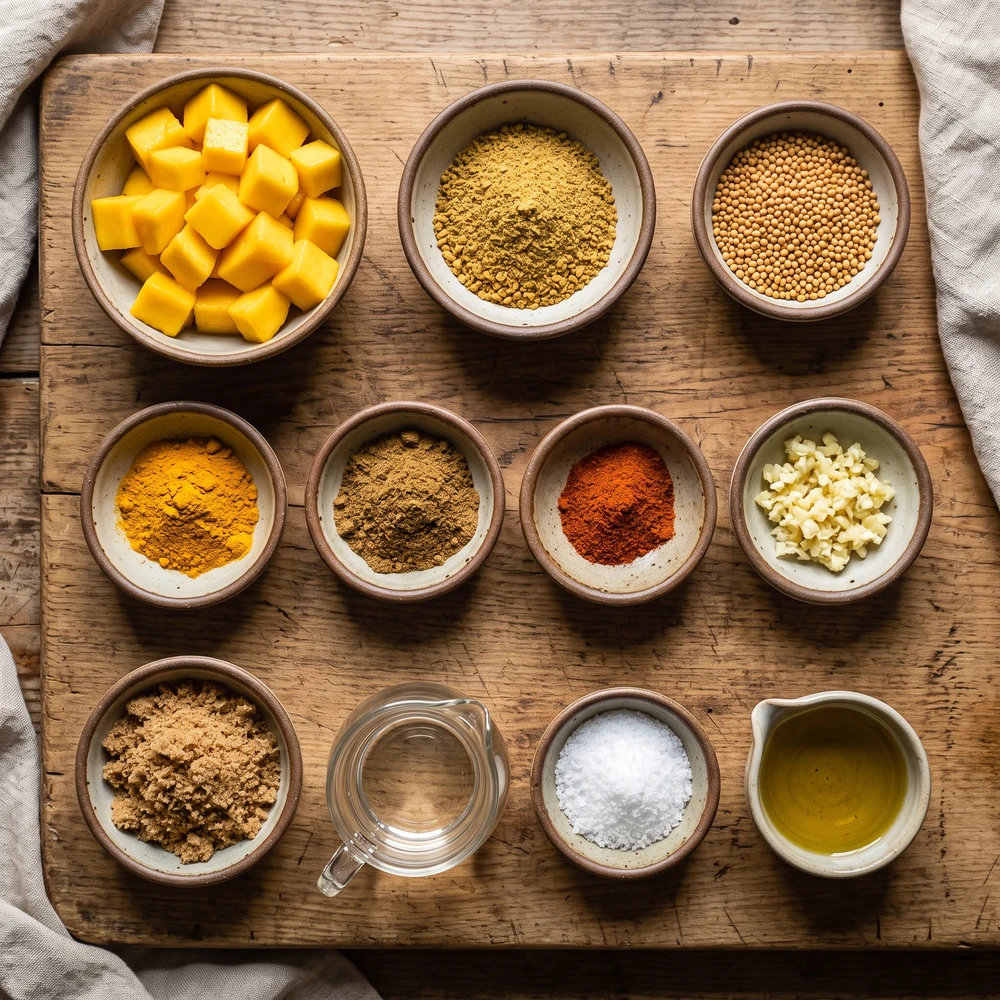
| 2 large (1.1 lbs) | Ripe MangoesPeeled, pitted, and diced into 1/2-inch cubes (Kent, Tommy Atkins, or Honey) |
| 2 tbsp | Extra Virgin Olive OilFor gentle spice blooming and lipid extraction |
| 1 tsp | Ground Fenugreek SeedsCrucial authentic amba flavor (sotolon lactones) |
| 1 tsp | Yellow Mustard SeedsWhole seeds for gentle pungent crunch and pops of heat |
| 1 tsp | Ground TurmericProvides vivid signature golden yellow color and earthy undertones |
| 1/2 tsp | Ground CuminWarm toasted aroma |
| 1/4 tsp | Cayenne PepperAdjust up to 1/2 tsp for spicy street-style kick |
| 3 cloves | Fresh GarlicFinely grated or minced |
| 1/2 cup | Apple Cider VinegarProvides authentic fermented tanginess and preservation acidity |
| 1/2 cup | WaterTo gently simmer and hydrate mango compote |
| 2 tbsp | Brown SugarBalances vinegar sharpness with caramel depth |
| 1 tsp | Fine Sea SaltTo intensify fruit sweetness and bloom aromatics |
Step-by-Step Cooking Instructions
Bloom the Spices in Warm Olive Oil
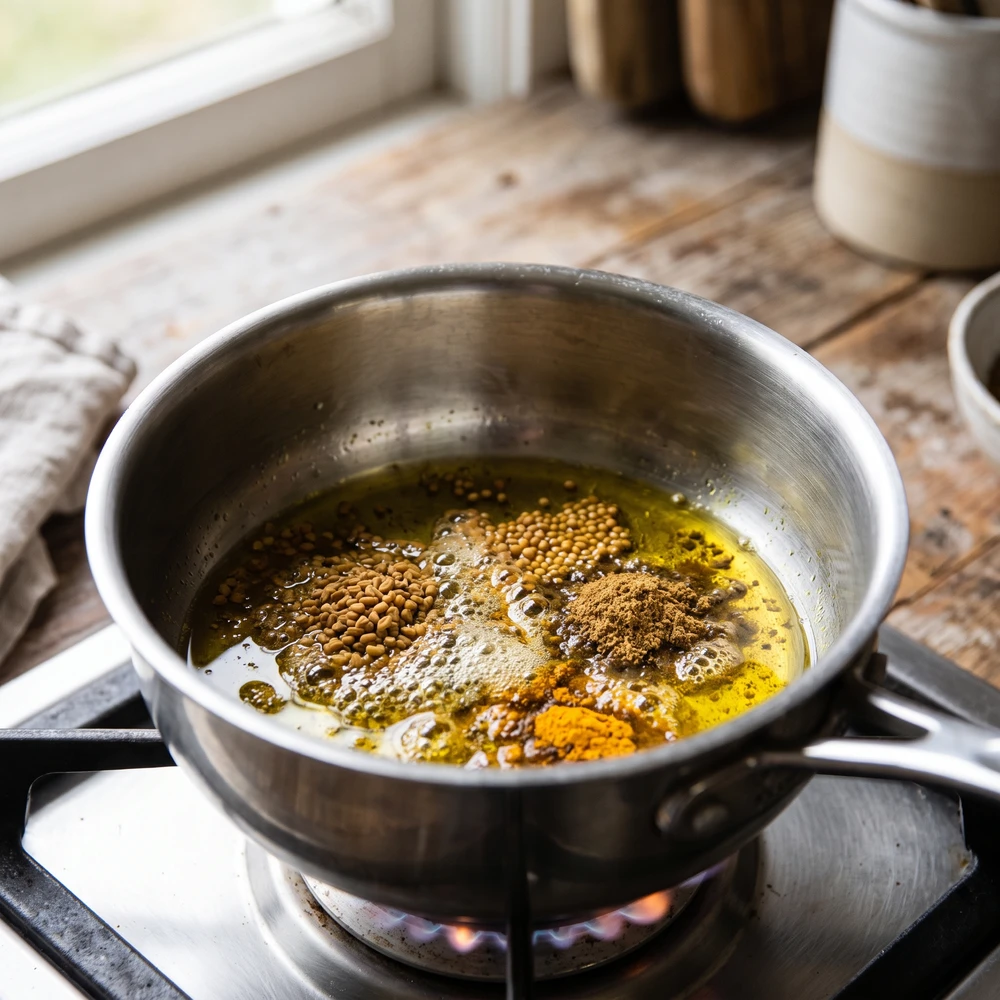
Heat 2 tablespoons of extra virgin olive oil in a small stainless steel saucepan over low heat. Add the yellow mustard seeds, ground fenugreek seeds, ground turmeric, ground cumin, and cayenne pepper. Swirl continuously for 60 to 90 seconds until the mustard seeds begin to faintly crackle and an intoxicating, nutty curry-like aroma fills your kitchen. Keep the heat low to avoid scorching the fenugreek.
Add Mangoes, Vinegar, Garlic & Sweetener
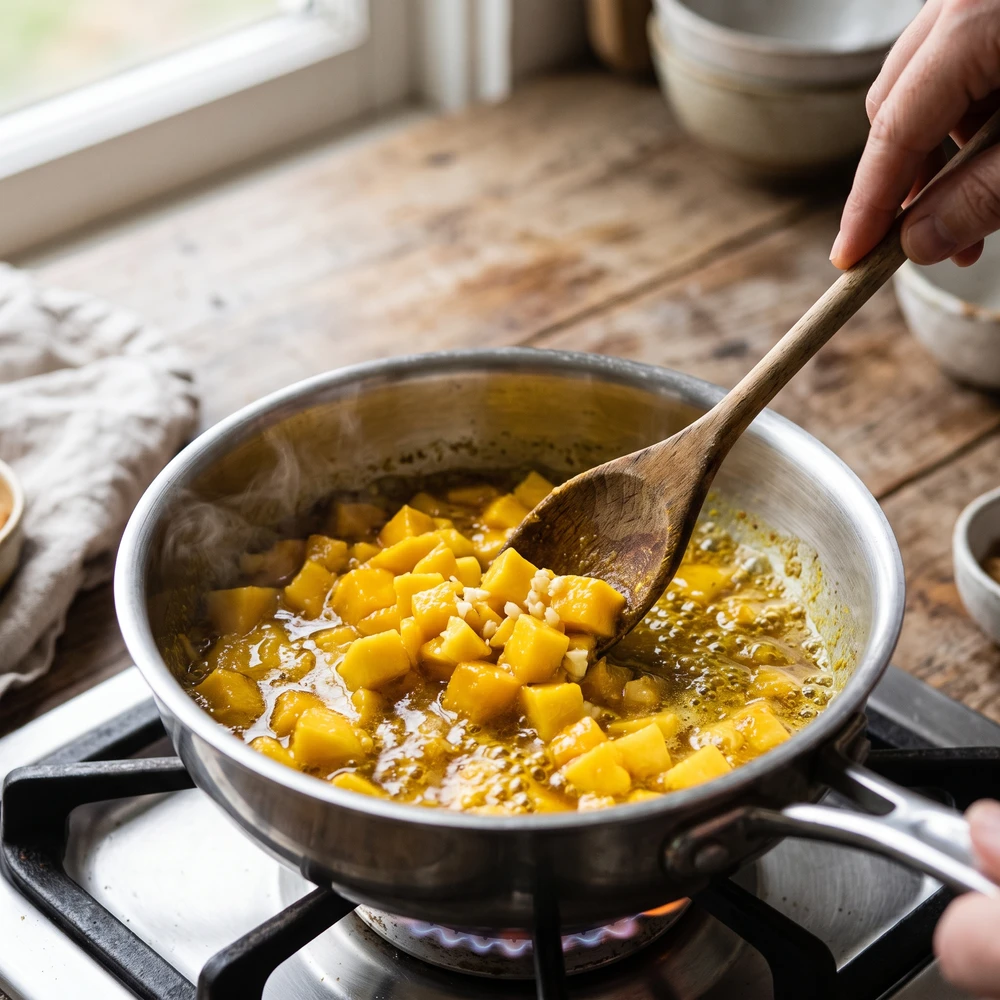
Toss in the minced garlic and stir for 30 seconds until softened. Immediately add the diced mango cubes, apple cider vinegar, water, brown sugar, and fine sea salt. Stir thoroughly with a wooden spoon, scraping the bottom of the saucepan to ensure all the golden bloomed spices are incorporated evenly into the liquid.
Simmer and Breakdown the Mangoes
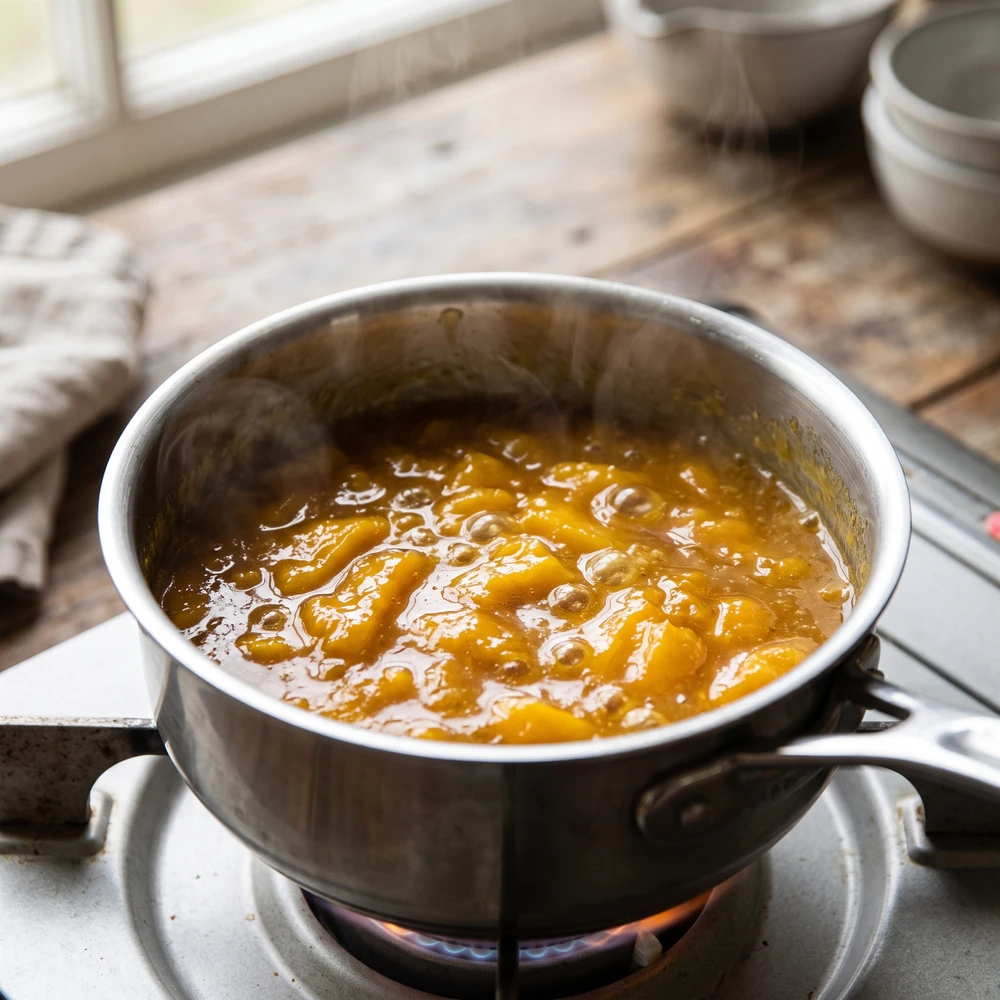
Bring the saucepan to a gentle boil over medium heat, then immediately reduce to low. Simmer uncovered for 18 to 20 minutes, stirring occasionally. The mango pieces will soften significantly and collapse into a fragrant, glossy, amber-golden compote as the liquid concentrates into a syrupy consistency.
Blend to Glossy Spoonable Consistency
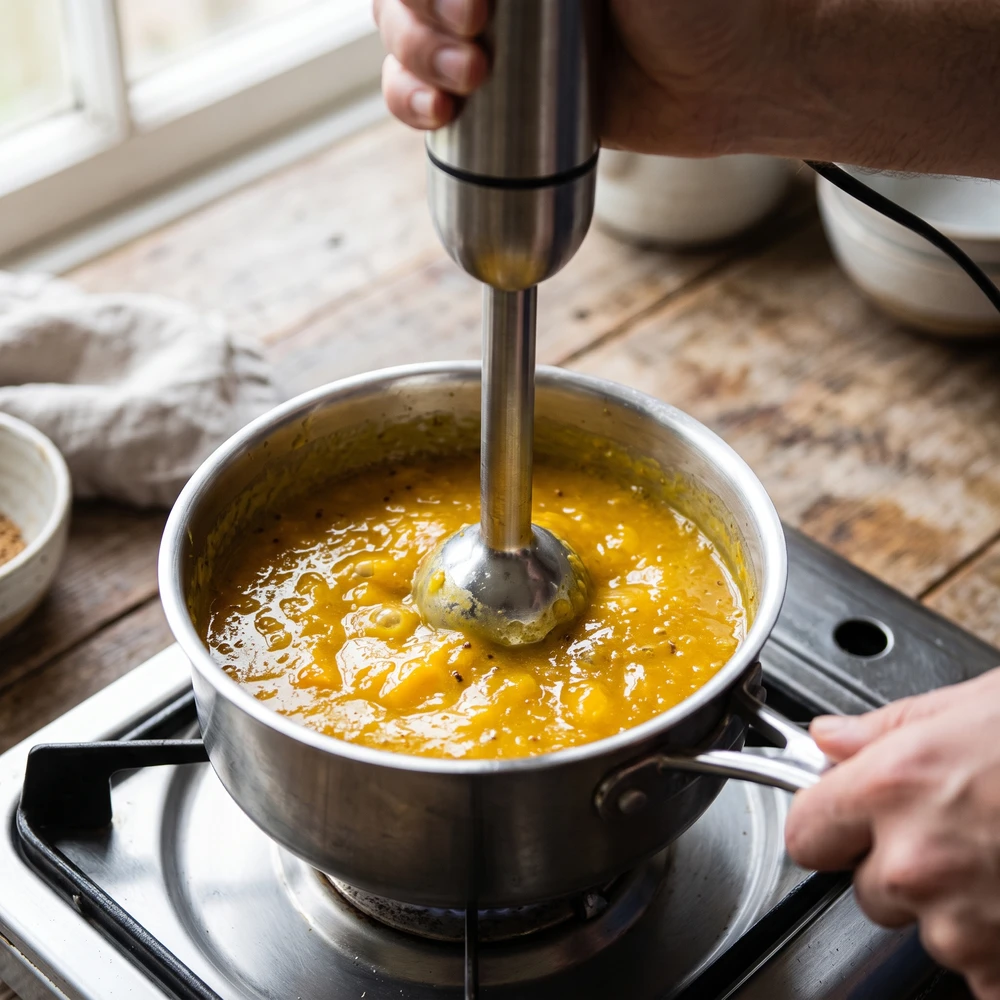
Remove the saucepan from the heat and allow to cool for 5 minutes. Using an immersion blender (or transferring half to a high-speed blender), pulse 4 to 6 times until the sauce reaches your preferred consistency. Street-food vendors serve amba predominantly smooth with small, luscious bits of tender fruit suspended throughout. Taste and adjust salt or vinegar if desired. Pour into a clean glass jar and refrigerate.
Pro Tips for Culinary Perfection & Safe Storage
- Flavor Aging Curve: While delicious straight from the pan, mango amba develops significantly greater depth after 24 to 48 hours in the refrigerator as the fenugreek and vinegar marry with the sweet mango starches.
- Shelf Life & Storage: Stored in an airtight sterilized glass mason jar in the refrigerator, this homemade amba keeps beautifully for up to 4 weeks. Always use a clean spoon to prevent bacterial introduction.
- Texture Customization: If you prefer a thinner drizzle for shawarma or tacos, simply whisk in 1 to 2 tablespoons of warm water before serving.
- Spiciness Dial: Feel free to increase cayenne pepper to 1/2 teaspoon or fold in 1 teaspoon of ground Aleppo pepper or crushed red pepper flakes during the spice-blooming step.
For an irresistible street snack pairing, dip our golden blistered Golden Air Fryer Samosas straight into this sweet, tangy mango pickle chutney.
Frequently Asked Questions
What does mango amba sauce taste like?
Mango amba has an electric, multi-dimensional flavor profile that is simultaneously tangy, savory, slightly sweet, and warming. The natural sweetness of ripe mango is balanced by sharp vinegar and earthy, maple-like fenugreek, punctuated by the savory pungency of mustard seeds and garlic. It is far more savory and pickled in character than sweet Western mango chutneys.
What is the difference between mango chutney and amba?
While Indian mango chutney is typically sweeter, jammy, and flavored with warm baking spices like cinnamon, cloves, and ginger, amba is an assertive, savory, and fermented pickled condiment. Amba relies heavily on ground fenugreek seeds, yellow mustard seeds, and turmeric, yielding a distinctly savory, pungent tang designed specifically to cut through rich, fatty street foods like shawarma, fried eggplant, and kebabs.
Why is fenugreek so essential in amba?
Fenugreek is the chemical cornerstone of amba. It contains sotolon, a potent aroma compound that produces a unique savory, bitter-sweet, maple-curry scent that defines authentic Middle Eastern amba. Without fenugreek, the sauce would taste like spiced mango compote rather than authentic amba. Blooming the ground fenugreek in gentle oil neutralizes its raw bitterness and releases its intoxicating savory aroma.
How long does homemade mango amba last in the fridge?
Homemade mango amba lasts for up to 4 weeks when refrigerated in an airtight, sterilized glass jar. The high acid content from the apple cider vinegar (pH < 3.8) combined with salt and natural fruit acids inhibits bacterial proliferation. For long-term preservation, you can also freeze amba in silicone ice cube trays for up to 6 months.